Desert Playas and Terminal Salt Pans: Halophytic Osmoregulation, Evaporite Crystallization, and Ephemeral Wetland Ecology
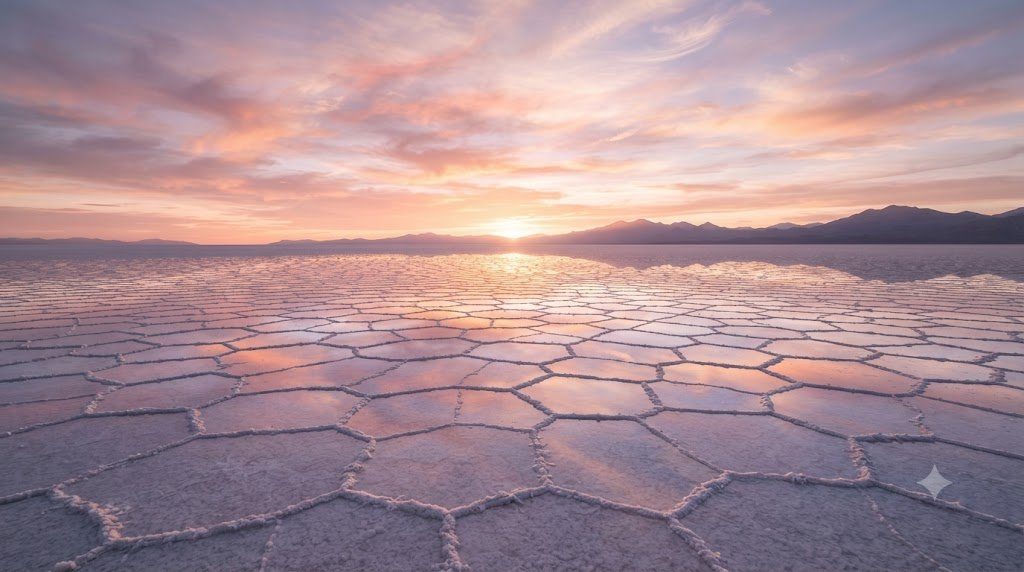
Desert playas, terminal salt pans, and saline dry lake beds—spectacularly represented by the Salar de Uyuni in Bolivia, Death Valley’s Badwater Basin in North America, the Etosha Pan in Namibia, and Lake Eyre in Australia—represent the ultimate geomorphic and geochemical endpoints of endorheic drainage basins across global arid biomes. Lacking any outlet to the sea, … Read more

Coastal Fog Deserts: Advection Fog Hydrodynamics, Welwitschia Physiology, and Beetle Water Harvesting in the Namib and Atacama

Coastal fog desert ecosystems—supreme examples represented by the Atacama Desert of northern Chile and Peru and the Namib Desert of southwestern Africa—occupy hyper-arid coastal strips wedged between cold upwelling ocean currents and towering inland escarpments. Recognized as the driest non-polar terrestrial landscapes on Earth, sections of the central Atacama have recorded zero measurable rainfall for … Read more

Cold Winter Deserts and Shrub-Steppes: Frost Freezing Cycles, Artemisia Dominance, and Biological Soil Crust Biogeochemistry

Cold winter desert and shrub-steppe ecosystems—prominently exemplified by the North American Great Basin Desert, the Central Asian Gobi Desert, the high-latitude Patagonian Desert, and the Iranian Plateau—occupy high-elevation continental basins situated at temperate latitudes (35° to 50° north and south). Unlike hot subtropical deserts, cold deserts are characterized by extreme continental seasonality: freezing, snow-swept winters … Read more

Hot Hyper-Arid Deserts: Crassulacean Acid Metabolism, CAM Photosynthesis, and Xerophytic Succulence in the Sahara and Sonoran Basins

Hot hyper-arid desert ecosystems—spectacularly represented across the African Sahara, the Arabian Rub’ al Khali, the North American Sonoran and Mojave basins, and the Australian Great Sandy Desert—occupy subtropical latitudes aligned with descending atmospheric Hadley cells (typically 15° to 35° north and south). Characterized by extreme annual moisture deficits (precipitation often under 50 to 150 mm … Read more