Riparian Wetland Buffers: Flood Hydrograph Attenuation, Nitrate Denitrification, and Riverine Ecological Connectivity

Riparian wetland corridors and forested alluvial floodplains—occupying the critical terrestrial-aquatic boundary along streams, rivers, and freshwater drainage networks—represent linear biodiversity hotspots and vital ecological lifelines across global biomes. Characterized by dynamic lateral connectivity with river channels, frequent scouring by flood hydrographs, saturated alluvial sediments, and multi-tiered vegetation canopies, riparian zones function as supreme natural filtration … Read more

Coastal Mangrove Ecosystems: Halophytic Physiology, Prop Root Hydrodynamics, and Blue Carbon Sequestration in Estuarine Zones

Coastal mangrove forest ecosystems—situated at the dynamic confluence of land and sea across tropical and subtropical coastlines—represent one of the most biogeochemically productive and physically protective biomes on Earth. Occupying intertidal depositional zones from the Sundarbans of Bangladesh and India through the Indo-Pacific archipelagos to the Caribbean and Central American coastlines, mangroves are composed of … Read more

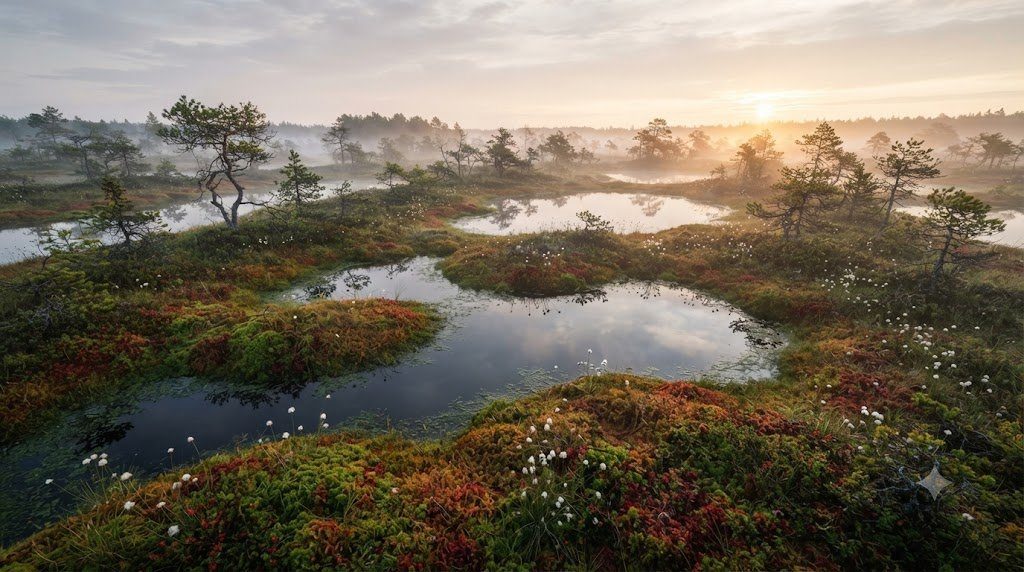
Peatland Biogeochemistry: Carbon Sequestration Mechanics, Sphagnum Moss Ecology, and Paleo-Archive Preservation in Bogs and Fens

Peatlands—comprising ombrotrophic bogs, minerotrophic fens, and forested peat swamp ecosystems—represent the ultimate terrestrial carbon vault of planet Earth. Although covering just 3% of the global land surface, peatlands store over 550 to 650 gigatons of organic carbon—more carbon than all the world’s forests combined, and nearly double the carbon pool stored in the entire global … Read more

Freshwater Marshes and Forested Swamps: Hydroperiod Dynamics, Anaerobic Soils, and Emergent Vegetation Stratification

Freshwater wetlands—predominantly categorized into herbaceous freshwater marshes and woody, tree-dominated forested swamps—represent hydrological ecotones where terrestrial and aquatic ecosystems merge under the pervasive influence of water saturation. Characterized by dynamic hydroperiods, chronic soil anoxia, unique redox chemistry, and specialized morphological adaptations, these ecosystems provide disproportionate ecological services relative to their spatial footprint. Marshes, dominated by … Read more