Cold winter desert and shrub-steppe ecosystems—prominently exemplified by the North American Great Basin Desert, the Central Asian Gobi Desert, the high-latitude Patagonian Desert, and the Iranian Plateau—occupy high-elevation continental basins situated at temperate latitudes (35° to 50° north and south). Unlike hot subtropical deserts, cold deserts are characterized by extreme continental seasonality: freezing, snow-swept winters where temperatures routinely drop below -25°C to -35°C, followed by blazing, arid summers exceeding 38°C. Governed by high-elevation rain shadows, deep winter frost heaving, and severe precipitation deficits (150 to 300 mm annually, arriving predominantly as winter snow), cold deserts are dominated by cold-hardy, drought-tolerant dwarf evergreen shrubs from the sunflower and goosefoot families: Big Sagebrush (Artemisia tridentata), Saltbush (Atriplex), Winterfat (Krascheninnikovia), and Greasewood (Sarcobatus). The ecological foundation of this biome is anchored by Biological Soil Crusts (biocrusts)—living microbial matrices of cyanobacteria, lichens, and mosses that cement loose surface soils against wind erosion and fix atmospheric nitrogen.
The Living Soil Skin: Biological Soil Crusts (Biocrusts)
In cold arid deserts where vascular plant canopy cover rarely exceeds 20% to 40%, the remaining ‘bare’ ground is not inert dirt; it is a complex, living biological skin known as a biological soil crust (microbiotic crust). Composed of specialized filamentous cyanobacteria (predominantly Microcoleus vaginatus), dark pigmented cyanolichens (Collema), and desiccation-tolerant mosses (Syntrichia caninervis), biocrusts weave loose sand and silt particles into cohesive, erosion-proof surface mats that fix nitrogen, enhance water infiltration, and resist severe freezing cycles.
1. High-Elevation Basins and Rain Shadow Geomorphology
The climatic severity of cold deserts is dictated by elevated topography, continental interior positioning, and monumental mountain barriers:
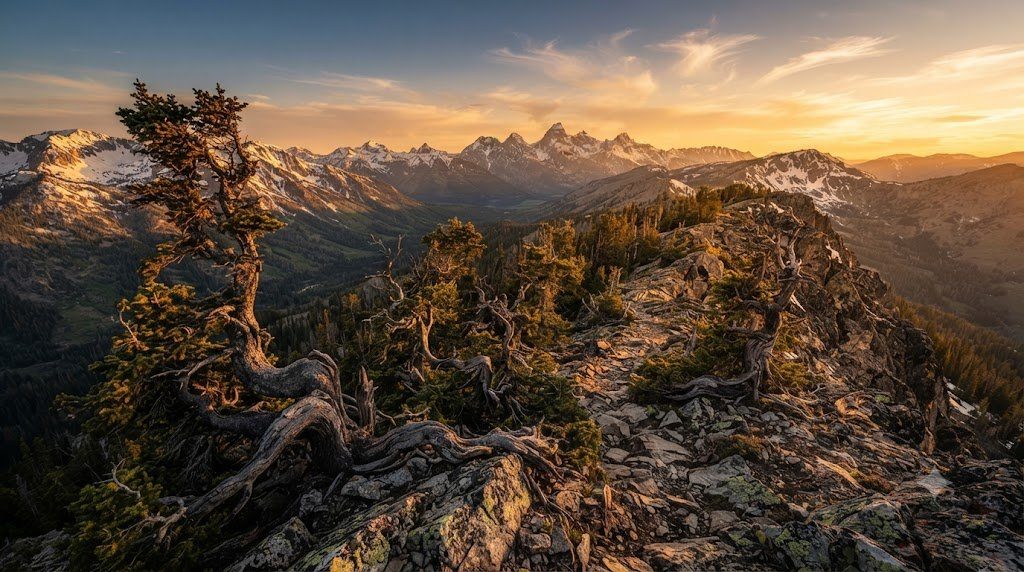
- The Basin and Range Topography of the Great Basin: Spanning Nevada, Utah, and parts of Oregon and California, the Great Basin sits at an average plateau elevation of 1,200 to 2,000 meters above sea level. It is bounded to the west by the formidable Sierra Nevada range, which intercepts Pacific winter storms, casting an immense precipitation rain shadow across the interior. The landscape features alternating north-south mountain ranges and internally draining (endorheic) terminal basins.
- The Continental Hyper-Aridity of the Gobi Desert: Spanning southern Mongolia and northern China, the Gobi sits behind the massive Himalayan uplift and Tibetan Plateau, completely isolated from Indian Ocean monsoon moisture. Polar continental air masses from Siberia bring brutal winter anticyclonic winds with virtually zero precipitation, creating hyper-arid, rocky gravel deserts (gobi pavements) and freezing dune fields.
2. Artemisia Tridentata (Big Sagebrush): Physiological Ecology of Cold Shrubs
The undisputed vegetative monarch of the North American cold desert shrub-steppe is Big Sagebrush (Artemisia tridentata), which covers over 40 million hectares across the Intermountain West:
Big sagebrush is not a true desert succulent; it is a C3 evergreen sclerophyllous shrub with two distinct sets of leaves. In spring, it produces large, thin ‘ephemeral’ leaves that conduct rapid photosynthesis when snowmelt is abundant. In summer, as soils dry, it sheds these leaves, retaining small, thick, three-lobed ‘persistent’ leaves covered in dense, silver-grey pubescent trichomes that reflect excess solar radiation and trap boundary layer moisture.
3. Biological Soil Crust Biogeochemistry and Cyanobacterial Polysaccharides
Biocrusts represent one of the most sophisticated, micro-scale ecological engineering networks on planet Earth:
- Filamentous Cyanobacteria & Exopolysaccharide Sheaths: The pioneer builder of biocrusts is the filamentous cyanobacterium Microcoleus vaginatus. When rain or snowmelt wets the soil, millions of microscopic filaments glide through soil pores. They secrete copious sticky extracellular polymeric substances (EPS)—complex mucilaginous polysaccharides—that coat sand and silt particles, gluing them into an erosion-proof, flexible crust up to 1 to 5 cm thick.
- Scytonemin UV Sunscreen Pigmentation: In the upper crust layer, cyanobacteria like Nostoc commune synthesize scytonemin, a dark yellow-brown lipid-soluble pigment located in the extracellular sheath. Scytonemin absorbs lethal ultraviolet radiation (UVA 315–400 nm), protecting delicate intracellular DNA from degradation while giving mature desert biocrusts their dark, blackened, textured surface appearance.
- Atmospheric Nitrogen Fixation: Cyanobacteria and cyanolichens (such as Collema tenax) possess specialized cells called heterocysts housing the nitrogenase enzyme. Biocrusts fix up to 5 to 15 kilograms of atmospheric nitrogen ($N_2$) per hectare annually, serving as the primary source of bioavailable nitrogen for surrounding vascular plants in desert soils devoid of organic matter.
4. Cryptobiotic Cryptogams: Anhydrobiosis and Instantaneous Revival
The mosses and lichens composing cold desert biocrusts are true poikilohydric extremophiles capable of anhydrobiosis—surviving in a completely dried, metabolically dormant state for years:
The Biophysical Magic of Syntrichia caninervis Moss
The dominant desert moss Syntrichia caninervis can lose over 95% of its internal cellular water, turning into a brittle, shriveled, blackened speck during scorching summer months. Its cellular structures are stabilized by high concentrations of non-reducing sugars (trehalose and sucrose) and late embryogenesis abundant (LEA) proteins that glassify cytoplasm, preventing membrane collapse. When a drop of rain or melting snow touches the dried moss, it rehydrates and expands within 2 to 5 seconds, reactivating cellular respiration within 3 minutes and initiating positive photosynthetic carbon assimilation within 15 minutes!
5. Wildlife Ecology: The Greater Sage-Grouse and Sagebrush Obligates
Cold desert shrub-steppes support an array of specialized vertebrate species that are completely dependent on sagebrush for survival—known as sagebrush obligates:
The premier flagship species of this biome is the Greater Sage-Grouse (Centrocercus urophasianus). Sage-grouse possess a specialized digestive physiology lacking a muscular gizzard for grinding hard seeds; instead, they possess an enlarged, paired cecum packed with specialized symbiotic microbes. During freezing winter months when snowpack buries all herbaceous vegetation, sage-grouse consume a diet consisting of 100% big sagebrush leaves, successfully detoxifying volatile monoterpenes and aromatic essential oils that are toxic to other birds and mammals. In spring, males congregate on traditional display arenas called leks, inflating yellow esophageal air sacs with resonant popping sounds to attract females.
Other sagebrush obligates include the Pygmy Rabbit (Brachylagus idahoensis)—the smallest leporid in North America, which burrows exclusively in deep sagebrush soils—and the Sage Thrasher (Oreoscoptes montanus), which nests exclusively inside dense sagebrush canopies.
6. The Cheatgrass-Wildfire Cycle: Ecological Breakdown of the Cold Desert
The cold desert shrub-steppe of North America is collapsing due to the invasion of an exotic Eurasian annual grass: Cheatgrass (Bromus tectorum):
Native big sagebrush plants do not resprout after fire; they must regenerate entirely from seeds that survive in the soil. Under historic fire regimes (return intervals of 60 to 110 years), sagebrush had ample time to mature and set seed. Cheatgrass germinates in late autumn, grows rapidly through winter, and cures in early June into a continuous, fine, highly combustible fuel carpet. Cheatgrass shortens the fire return interval to just 3 to 5 years. These frequent fires completely incinerate young sagebrush seedlings before they can reach seed-bearing maturity, permanently transforming millions of hectares of diverse shrub-steppe into sterile, flammable annual grass monocultures.
7. Trampling, Cattle Grazing, and Biocrust Destruction
While biological soil crusts are extraordinarily resilient to freezing and drought, they are acutely vulnerable to mechanical physical disruption:
The hooves of domestic cattle, off-road recreational vehicles, and energy development easily crush dry biocrusts, pulverizing the delicate cyanobacterial filament network into loose dust. Once crushed, the unprotected desert soil is easily carried away by high winds, generating massive regional dust storms that blow onto mountain snowpacks hundreds of miles away. Dark dust settling on mountain snow reduces snow albedo, accelerating spring snowmelt by up to 3 to 6 weeks and severely disrupting downstream municipal and agricultural water supplies across the western United States. Full recovery of mature lichen-dominated biocrusts requires 50 to 250 years of undisturbed conditions.
8. Pinyon-Juniper Woodland Encroachment into Shrub-Steppes
In addition to cheatgrass invasion, cold desert sagebrush rangelands are undergoing severe woody expansion from native conifers: Singleleaf Pinyon Pine (Pinus monophylla) and Utah Juniper (Juniperus osteosperma):
- Historical Fire Suppression & Phase Transitions: Driven by over a century of fire suppression and historical livestock overgrazing, pinyon and juniper trees have expanded their range by over 600% across the Intermountain West, moving down mountain slopes into lower sagebrush valleys.
- Phase III Canopy Closure & Understory Collapse: In Phase I, young trees establish scattered within healthy sagebrush. By Phase III (canopy closure), dense conifer canopies intercept light and rainfall. Their extensive surface lateral root networks aggressively deplete soil water, causing complete mortality of understory sagebrush, perennial bunchgrasses, and biological soil crusts.
- Severe Soil Erosion & Mechanical Mastication Restoration: Bare ground beneath Phase III juniper canopies increases dramatically, accelerating sheet and rill erosion during heavy rainstorms. Modern habitat restoration utilizes mechanical bullhog mastication and chaining to shred invasive conifers, restoring sunlight to the ground and releasing suppressed native sagebrush and perennial grass seedbanks.
9. Dust Storms, Continental Loess Deposition, and Global Biogeochemistry
Cold deserts are the planetary epicenters for the generation and continental transport of atmospheric mineral dust (loess):
In the Gobi and Taklamakan Deserts, powerful springtime cyclonic winds lift millions of tons of fine silt and clay particles high into the troposphere. These vast yellow dust plumes (Asian Dust / Kosa) travel thousands of kilometers across China, Korea, and Japan, crossing the Pacific Ocean to reach North America. While causing severe urban respiratory hazards and darkening mountain snowpacks, this airborne mineral dust delivers vital iron ($Fe$) and phosphorus ($P$) subsidies to nutrient-limited marine ecosystems in the North Pacific Ocean, stimulating massive phytoplankton blooms that absorb atmospheric $CO_2$.
10. Frequently Asked Questions Regarding Cold Winter Deserts
Q: What makes a cold desert different from a hot desert?
Cold deserts are situated at higher elevations and temperate latitudes, experiencing freezing sub-zero winters with snow (-25°C to -35°C), whereas hot deserts experience mild winters and extreme year-round heat.
Q: What is a biological soil crust (biocrust)?
A biocrust is a living surface skin on desert soil composed of cyanobacteria, lichens, and mosses that glues sand particles together, prevents wind erosion, and fixes atmospheric nitrogen.
Q: How does the desert moss Syntrichia caninervis survive extreme drying?
It enters anhydrobiosis, losing over 95% of cellular water while stabilizing cell membranes with sugars and LEA proteins. When wet, it revives and resumes photosynthesis in under 15 minutes.
Q: Why is big sagebrush (Artemisia tridentata) so dominant in the Great Basin?
Big sagebrush possesses deep taproots and extensive surface roots, along with dual leaf sets (thin spring leaves and thick hairy summer leaves) that maximize water efficiency under severe freeze-drought cycles.
Q: How does cheatgrass destroy the sagebrush ecosystem?
Cheatgrass creates a continuous carpet of fine dry fuel that burns every 3 to 5 years instead of the natural 60-100 year cycle, repeatedly killing young sagebrush plants before they can produce seeds.
Q: Why do Greater Sage-Grouse eat sagebrush leaves in winter despite toxic terpenes?
Sage-grouse have specialized digestive ceca and liver enzymes that detoxify sagebrush aromatic essential oils, providing a rich, abundant food source when snow buries all other plants.
Q: How does crushing biocrusts accelerate mountain snowmelt hundreds of miles away?
Crushed biocrusts turn into loose dust that windstorms blow onto mountain snowpacks. Dark dust absorbs sunlight, lowering snow albedo and melting snowpack weeks earlier than normal.
Q: What is the scytonemin pigment in desert biocrusts?
Scytonemin is a dark extracellular pigment synthesized by cyanobacteria in biocrusts that acts as a natural sunscreen, absorbing harmful ultraviolet (UV) radiation and protecting living DNA.
Q: What is Phase III Pinyon-Juniper encroachment?
It is the advanced stage of woodland expansion where dense conifer canopies completely shade out the ground, outcompeting understory sagebrush and bunchgrasses for water and leaving bare, erodible soil.
Q: How do Gobi Desert dust storms fertilize Pacific Ocean marine life?
Spring windstorms blow mineral dust across the ocean. The iron and phosphorus in the dust dissolve in surface ocean waters, acting as vital fertilizers that trigger massive oceanic phytoplankton blooms.